
Non Healing Mouth Ulcer: Oral Cancer Warning Signs & Tests in Delhi

If a mouth ulcer does not heal after two or three weeks, it is time to take it seriously. Most common ulcers heal within one to two weeks. A persistent mouth ulcer that lasts longer can sometimes be an early warning sign of oral cancer, especially if you use tobacco or gutka, or drink alcohol regularly.
When Should You Get a Mouth Ulcer Checked?
If a mouth ulcer has not healed within two weeks, book a dental appointment. A mouth ulcer lasting more than three weeks should not be left unchecked, even if it is small or painless.
You should also get it examined if it keeps appearing in the same place, becomes larger or feels different from ulcers you have had before.
Do not wait for severe pain before seeking help. Some suspicious mouth ulcers cause very little discomfort in the early stages.
Oral Cancer Warning Signs You Should Know
An ulcer that does not heal is one possible warning sign, but it is not the only one. Other oral cancer symptoms can include:
- A persistent red or white patch inside the mouth
- A firm or growing lump in the mouth or neck
- Unexplained bleeding from an ulcer or another area inside the mouth
- Numbness in the tongue, lip or another part of the mouth
- Difficulty chewing, swallowing or moving the tongue
- Increasing difficulty opening the mouth
- A loose tooth without an obvious dental reason
These changes can happen for reasons other than cancer. An examination is needed to understand what is causing them.
If you have difficulty breathing, cannot swallow liquids or have heavy bleeding that does not stop, seek urgent medical care.
What Else Can Cause a Mouth Ulcer That Will Not Heal?
Sometimes, the reason is repeated irritation. For example, a broken tooth may keep rubbing against the tongue, or a denture may repeatedly injure the same area.
Certain infections, medicines, nutritional deficiencies and inflammatory conditions can also cause mouth ulcers. Your dentist or doctor will consider these possibilities based on your symptoms and medical history.
An ulcer gel may reduce pain, but it cannot tell you why the ulcer is there. If the sore persists, finding the cause is more important than trying another product.
Tobacco, Gutka and Oral Cancer Risk
Smoking cigarettes or bidis and chewing tobacco increase the risk of oral cancer. Products such as gutka, khaini and zarda are particularly relevant in India.
Areca nut, commonly called supari, also increases oral cancer risk, even when used without tobacco. Paan masala containing areca nut is therefore not a safe alternative to tobacco.
Alcohol adds to the risk, especially when combined with tobacco.
However, oral cancer can also occur in people who do not use these products. A persistent oral ulcer needs attention regardless of your habits.
Which Doctor Should You Consult?
A dentist or an oral medicine specialist is a good starting point for a mouth sore that will not heal. They will examine the ulcer, check for possible dental irritation and look at the surrounding tissues.
If the area appears suspicious, you may be referred to an oral and maxillofacial surgeon or a head and neck surgeon for further assessment.
If cancer is confirmed, treatment is planned by the relevant cancer specialists, which may include a head and neck surgeon and an oncologist.
You do not need to book a CT scan or MRI on your own before this examination.
What Tests Are Used for Oral Cancer Diagnosis?
The tests depend on what the doctor finds. Not every mouth ulcer needs a biopsy, and not every patient needs a scan.
1. Mouth and Neck Examination
The clinician examines the lips, cheeks, gums, tongue and other areas inside the mouth. They may also feel the neck for enlarged lymph nodes or other lumps.
Oral cancer screening generally starts with this visual and physical examination. If you already have a persistent ulcer, the visit is an assessment of that symptom rather than just a routine screening check.
2. Biopsy for Oral Cancer
If an ulcer or another oral lesion looks suspicious, the specialist may advise a biopsy.
A small tissue sample is taken, usually under local anaesthesia, and examined by a pathologist. A biopsy is the main test used to confirm whether a suspicious mouth lesion is cancerous.
The appearance of an ulcer, a photograph or a scan alone cannot reliably confirm the diagnosis.
3. CT Scan for Mouth Cancer
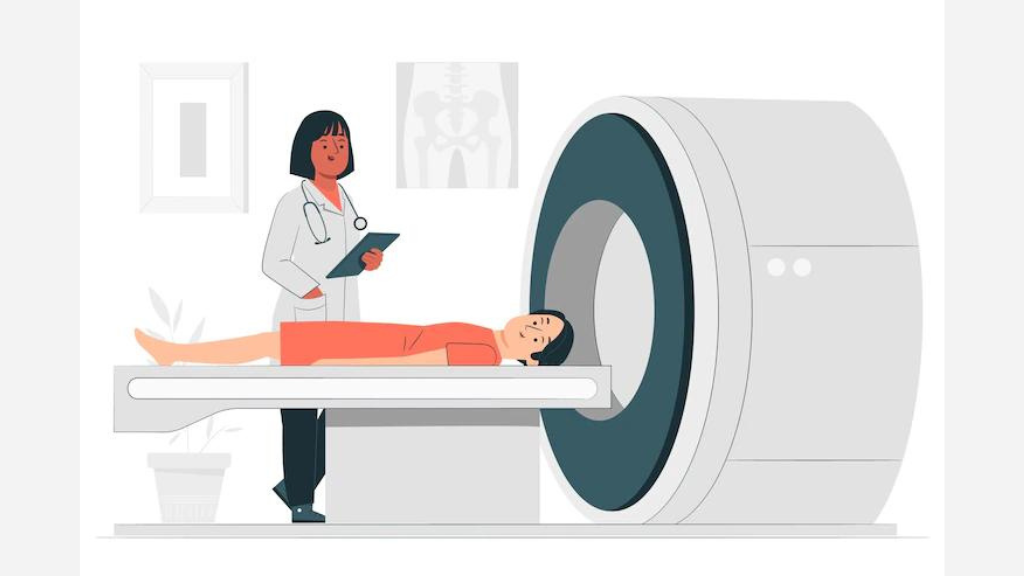
A CT scan may be advised when cancer is suspected or has been diagnosed. It can help assess nearby structures, including bone and neck lymph nodes.
Its main role is to help doctors understand the extent of disease and plan treatment. It is not a routine test for every mouth ulcer.
4. MRI for Oral Cancer
MRI gives detailed images of soft tissues. It may help doctors assess how far a tumour extends into the tongue, nearby muscles or other structures.
Your doctor will decide whether CT, MRI or another investigation is needed. You may not need both scans.
5. Neck Ultrasound and FNAC
A neck ultrasound can help assess a lump or enlarged lymph node. A colour Doppler neck scan may provide additional information about blood flow.
If a sample is needed, ultrasound can guide fine needle aspiration cytology, commonly called FNAC. This involves using a thin needle to collect cells from a lump or lymph node.
FNAC of a neck lump does not usually replace a biopsy of a suspicious mouth ulcer. Ultrasound and Doppler also cannot confirm or rule out oral cancer on their own.
Oral Cancer Tests and Imaging in Delhi
If your dentist or specialist has advised diagnostic tests, contact Star Imaging and path lab limited in Delhi with your prescription to check availability and appointment details.
Before booking, confirm any preparation instructions and ask which previous reports you should carry. Also check whether the specific scan, sampling procedure or laboratory examination advised by your doctor is available.
The important thing is to get the right test for your condition. A general health package or a scan chosen without medical advice is not a substitute for examining the ulcer.
Frequently Asked Questions
Question - Does a non healing mouth ulcer always mean cancer?
Answer - No. Dental irritation and several other conditions can prevent an ulcer from healing. However, an ulcer that remains beyond two weeks should be examined so that the cause can be identified.
Question - Can an oral cancer ulcer be painless?
Answer - Yes. Early oral cancer symptoms may cause little or no pain. Do not use pain alone to decide whether a mouth ulcer needs attention.
Question - Can blood tests detect oral cancer?
Answer - Routine blood tests cannot confirm or rule out oral cancer. They may help investigate other causes of ulcers or assess general health. A suspicious mouth lesion usually needs a tissue biopsy for diagnosis.
Question - Can a full body checkup rule out mouth cancer?
Answer - No. Normal results from a routine full body checkup do not rule out oral cancer. A persistent mouth sore needs a direct examination and, if indicated, a biopsy.
Question - Where should I go for oral cancer screening in Delhi?
Answer - Start with a dentist, oral medicine specialist or a clinician experienced in examining the mouth and neck. If further investigations are advised, contact Star Imaging to enquire about the prescribed tests.
Question - Do Not Keep Waiting for the Ulcer to Heal
Answer - Most mouth ulcers are not cancer. Still, a sore that remains beyond two weeks deserves a proper examination.
Book a dental consultation first. If diagnostic tests are advised, contact Star Imaging and path lab limited for availability, preparation instructions and booking details.



.png)



Comments List