
7 major types of allergies identified by CRD testing
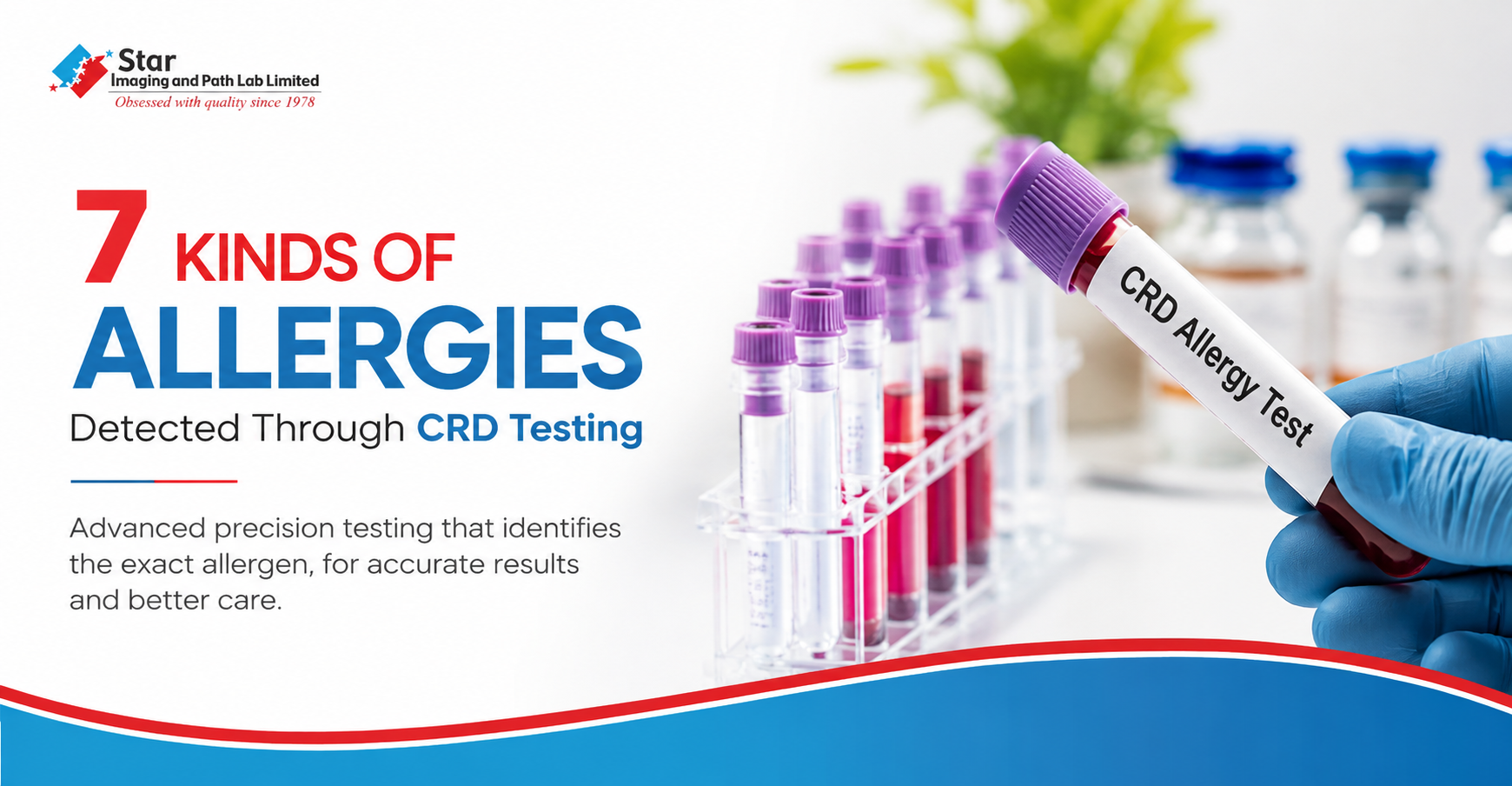
The 7 kinds of allergies that are detected through CRD testing are the basis of precision diagnostics of allergies in the modern world. Component Resolved Diagnostics (CRD) allows the analysis of proteins contained in certain allergens separately, which helps to find the exact allergen that causes an immune system response.
In this way, CRD testing has become a breakthrough in the classification of allergic triggers in terms of foods, respiratory factors, insects, and other sources. As opposed to traditional allergy tests, in which people receive a positive or negative answer, CRD gives a profile of proteins that help to identify whether a reaction is primary, cross-reactive, dangerous or unimportant.
The 7 types of allergies described in this article are the most common allergy groups that are analyzed through molecular allergy tests. Each of them has its own diagnostic value.
Molecular Testing vs Traditional Extract Testing
Tests based on extracts only prove sensitization against a particular source but not a specific protein. The CRD will tell you the specific allergen protein that causes your allergy, and this will affect your interpretation of the test results.
Stable proteins are usually associated with primary allergy. Labile proteins, on the other hand, are usually found to be in the case of cross-reaction.
The 7 Major Allergy Types Identified by CRD
1. Food allergies
CRD analyses particular elements within foods including milk, egg, peanut, tree nuts, wheat, soy, fish, and shellfish. Typically, storage proteins point to a primary food allergy and higher reaction potential.
Other elements usually suggest cross-reactivity or clinical risk that is lower. Such information assists in safer dietary advice and in distinguishing between IgE-mediated allergy and non-immunological reactions. The comparison can be found in the article food allergy vs food intolerance.

2. Pollen allergies
There are allergen molecules in tree, grass, and weed pollens. CRD analyses markers associated with birch, timothy grass, ragweed, and other pollen origins.
The analysis results may also show whether sensitization occurs only due to pollen or pollen is connected to plant foods, which is called a pollen-food allergy syndrome. Symptoms related to seasonal respiratory disease and mild oral symptoms upon consumption of some fruits become clearer.

3. Dust mite allergies
The most common perennial allergens include house dust mites and storage mites. CRD analyses particular molecular elements responsible for chronic rhinitis, conjunctivitis, and asthma.
Also, there can be discovered cross-reactivity with tropomyosin proteins from shellfish. After identification of mites components, allergen avoidance becomes more efficient.

4. Pet and Animal Dander Allergies
Cat, dog, and other animal allergens are found in dander, saliva, and urine. CRD will separate the major allergens within these categories.
Component profiles will explain why one particular animal is more tolerated than others. Cross-reactivity among the different animals can be identified as well.

5. Mold Allergies
Alternaria, Aspergillus, and Cladosporium are molds that produce allergen proteins which cause respiratory and dermatological symptoms. CRD analyzes the specific components.
The results will help establish whether there is sensitivity towards the outdoors mold spore allergens, indoors mold spore allergens, or both.

6. Insect Venom Allergies
Insects like bees and wasps have powerful allergens in their venoms. CRD will distinguish between different species of insects through their components.
The problem with insect venom allergies is that it may cause severe systemic reactions. It is vital to differentiate between true sensitization and cross-reactivity.

7. Latex and Cross-Reactive Allergies
There are many allergens found in latex. CRD is used to identify the allergens and link them to specific plant foods. This process is known as latex-fruit syndrome and is associated with bananas, avocados, and kiwi fruits.
This type of test is especially important in patients who have been exposed to latex several times.

Clinical Application of CRD Classification
Classifying positive tests into these seven main categories transforms a long list of sensitizations into clinically relevant patterns. Primary tests related to food or venoms always require more precautionary measures. Pollen and dust mite test results are frequently correlated with environmental management. For cross-reactive results, more leeway can be applied after evaluation by the doctor.
A complete CRD panel assesses various molecular allergens and extracts from one blood sample. It is especially helpful in situations where previous testing yielded inconclusive results, there is an overlap between symptom categories, or several sensitizations co-exist. Being sensitized does not always mean being allergic; a correlation with the patient’s medical history is necessary.
Book Your CRD Allergy Test at Star Imaging and Path Lab
Having a molecule-level understanding about the specific type of allergies helps both the patient and the doctor to reach a mutually-understandable and informed decision point.
At Star Imaging and Path Lab, we provide you with advanced CRD allergy testing services in Delhi. Our quality assured (NABL), expert pathology department, sample collection at home, and digital reports ensure an easy process from scheduling to result interpretation.
Schedule your CRD allergy test at Star Imaging and Path Lab right away
Get your sample collected and tested at our Delhi center
Check more details of CRD Allergy Test in Delhi
Frequently Asked Questions (FAQs)
Q1. What is CRD testing in allergy diagnosis?
A1. CRD (Component Resolved Diagnostics) is an advanced blood test that measures IgE antibodies against individual allergen proteins instead of whole extracts. It delivers precise, molecule-level accuracy for identifying the exact trigger behind an allergic reaction.
Q2. What are the 7 major types of allergies identified by CRD testing?
A2. The seven major types include food, pollen, dust mite, pet and animal dander, mold, insect venom, and latex allergies. CRD pinpoints the specific protein within each category responsible for the reaction.
Q3. How is CRD testing different from a regular allergy blood test?
A3. Regular tests use whole allergen extracts, while CRD analyzes individual purified or recombinant protein molecules. This makes CRD far more accurate, especially in patients with multiple or confusing positive results.
Q4. Can CRD testing distinguish a true allergy from cross-reactivity?
A4. Yes, this is one of its biggest strengths. CRD separates primary sensitization from cross-reactive patterns, helping avoid unnecessary dietary or environmental restrictions.
Q5. Who should consider getting a CRD allergy test?
A5. Anyone with unclear traditional test results, multiple sensitizations, severe reactions, or complex symptoms should consider CRD testing. It is especially valuable for suspected peanut, shellfish, pollen-food, latex-fruit, or venom allergies.



_vs_Covid-19_How_the_Two_Viruses_Differ_and_Why_It_Matters.jpg)
1.jpg)
.png)
.png)



Comments List