
How Often Should You Get a Low-Dose CT Scan?
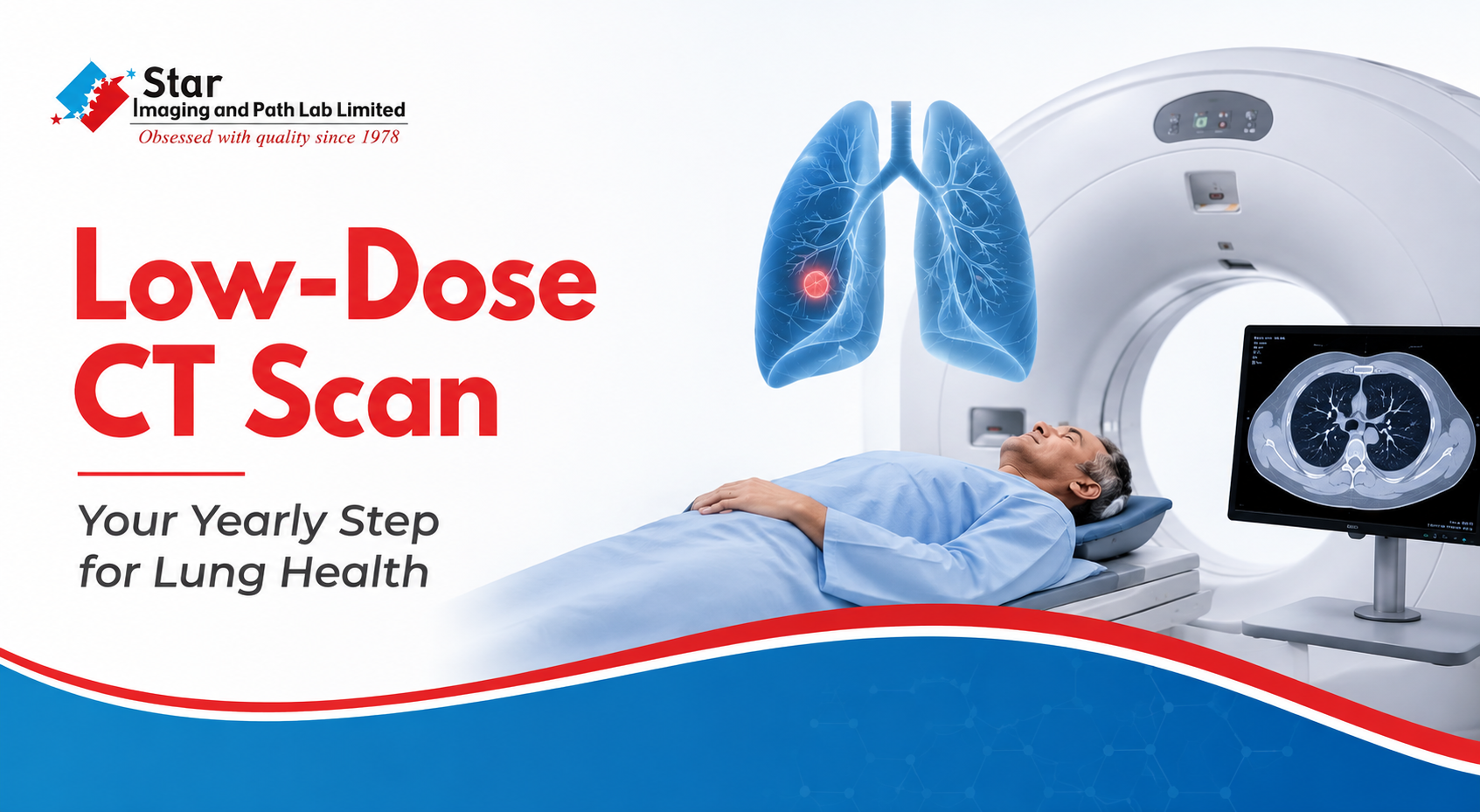
Lung cancer is one of the leading causes of cancer-related deaths across the world, and the sad part is that most cases get detected only in the late stage. Early screening is the only smart way to fight this silent disease, and that is where the low-dose CT scan frequency becomes very important. High-risk patients often ask how often they should repeat the test for safe and reliable results. Star Imaging and Path Lab helps every patient understand the right screening schedule and guides them at each step of the journey.
Understanding the Low-Dose CT Scan
A low-dose CT scan, also called LDCT, uses a very small amount of radiation to take sharp images of the lungs. Doctors mainly suggest this test for lung cancer screening in high-risk patients. The scan finishes in a few minutes and does not need any injection, dye, or fasting. It picks up small pulmonary nodules that a normal chest X-ray usually misses. Patients who want to compare both tests can read the detailed guide on Low-Dose CT vs Chest X-Ray for a clearer idea.
Recommended Low-Dose CT Scan Frequency for High-Risk Individuals
Most health experts advise an annual LDCT screening for people who fall in the high-risk group. This means one scan every year without any gap. A yearly low-dose CT scan frequency helps doctors compare old and new images and spot even a small change in the lung tissue. Missing even one year may delay the diagnosis of early lung cancer.
High-Risk Group That Needs Yearly LDCT Screening
-
Adults between 50 and 80 years of age
-
People with a pack-year smoking history of 20 or more
-
Current smokers or those who quit within the last 15 years
-
Individuals with a family history of lung cancer
-
Workers exposed to asbestos, radon, or heavy industrial fumes
Yearly CT Scan for Smokers and Former Smokers
Smokers and ex-smokers carry the biggest risk of lung cancer. A yearly CT scan for smokers gives the best chance of finding the disease at a treatable stage. Even those who quit smoking years ago should continue their annual LDCT screening till they cross 15 smoke-free years or reach the age of 80. Star Imaging offers this test with modern machines that keep the radiation exposure very low during every repeat scan.
Factors That Decide the Low-Dose CT Scan Frequency
Not every patient follows the same schedule. Doctors check age, smoking habit, past medical reports, and current lung condition before fixing the low-dose CT scan frequency. In some cases, the doctor may call the patient after six months instead of one full year, mostly when a small pulmonary nodule needs a close watch. People living in polluted cities need extra care, and the Low-Dose CT Scan in New Delhi guide explains this point in detail.
Key Points Doctors Check Before Fixing the Screening Schedule
-
Age and general health of the patient
-
Total years of smoking and daily cigarette count
-
Findings from the last LDCT report
-
Size and shape of any pulmonary nodule
-
Exposure to air pollution or workplace dust
Early Lung Cancer Detection Through Annual LDCT Screening
Early lung cancer detection saves lives. Research shows that regular LDCT screening lowers the death rate from lung cancer by nearly 20 percent among high-risk individuals. The scan spots tumours when they are still small and easy to treat with surgery or targeted therapy. Waiting for symptoms like long cough, chest pain, or sudden weight loss usually means the cancer has already spread to other parts.
Safety and Radiation Exposure in a Low-Dose CT Scan
Many patients worry about radiation exposure from repeat scans every year. The good news is that a low-dose CT scan uses nearly 75 percent less radiation than a standard CT chest. This low radiation dose makes it safe for yearly use, and the benefit of early detection is far greater than the very small risk. Star Imaging follows strict safety rules and uses the latest machines to keep the dose as low as possible. Complete details about the test are available on the Low-Dose CT Scan page.
Simple Safety Tips for Yearly LDCT Patients
-
Always share the past scan report with the radiologist
-
Avoid unwanted CT scans from different centres in the same year
-
Wear loose clothes without any metal during the test
-
Follow the doctor's advice on the next scan date
-
Pick a trusted centre like Star Imaging for safe imaging
When Doctors Advise Stopping the Yearly Scan
Doctors usually stop the annual LDCT screening once the patient crosses 80 years of age, stays smoke-free for more than 15 years, or develops a serious health issue that limits treatment options. The decision always rests on the doctor's advice after a full review of the medical history and reports.
Final Thoughts
The right low-dose CT scan frequency depends on age, smoking history, and overall lung health. For most high-risk individuals, one scan every year is the golden rule that supports early lung cancer detection. Star Imaging offers safe, quick, and affordable LDCT screening with expert radiologists who guide each patient at every step of the journey. Booking a yearly test is a small step that can add many healthy years to life.
Frequently Asked Questions (FAQs)
1. How often should a high-risk person get a low-dose CT scan?
High-risk individuals should get a low-dose CT scan once every year. Yearly screening helps doctors compare new images with old ones and catch even a small change in the lung tissue at the earliest stage.
2. Is a yearly low-dose CT scan safe for the body?
Yes, a yearly LDCT is completely safe. It uses nearly 75 percent less radiation than a standard CT chest, and the benefit of early lung cancer detection is far greater than the very small risk from the low radiation dose.
3. At what age should a person stop the annual LDCT screening?
Doctors usually stop the yearly scan once the patient crosses 80 years of age, stays smoke-free for more than 15 years, or develops a serious health problem that limits treatment. The final call always rests on the doctor's advice.
4. Can a non-smoker also go for a low-dose CT scan?
Yes, non-smokers with a strong family history of lung cancer, long exposure to air pollution, asbestos, radon, or heavy industrial fumes can also go for LDCT screening. The doctor decides the right frequency after checking the personal risk level.
5. What happens if a small pulmonary nodule shows up in the report?
If the report shows a small pulmonary nodule, the doctor may call the patient for a repeat low-dose CT scan after three to six months instead of one full year. This close watch helps track any change in the size or shape of the nodule.


.jpg)
.jpg)
1.jpg)

.png)
.jpg)
.png)
Comments List