
Low Dose CT vs Chest X-Ray: Key Differences Explained
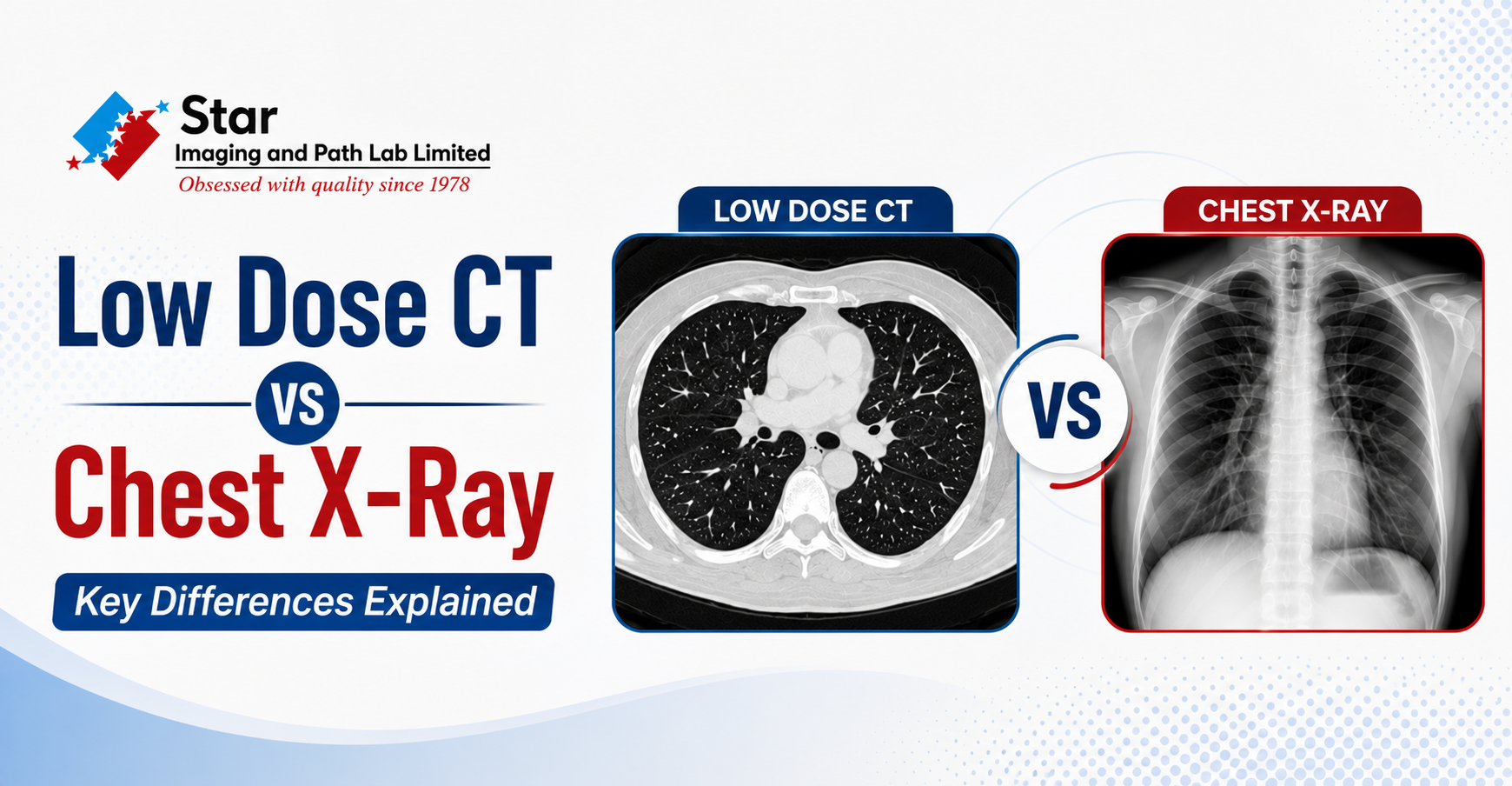
Doctors often use imaging tests to check lung health. Low Dose CT Scan gives much clearer results than a regular Chest X-Ray. The two tests differ greatly in detail, radiation dose, and how well they find problems. Low Dose CT Scan helps doctors see small changes that a Chest X-Ray might miss. This article explains the main differences in simple terms.
Understanding Low Dose CT vs Chest X-Ray Basics
The core difference in Low Dose CT vs Chest X-Ray starts with how the images are made. A chest X-ray sends a quick beam of radiation through your chest and creates one flat picture. Ribs, heart, and lungs can overlap in that single view, which sometimes hides small spots. Low dose CT takes many thin pictures from different angles in just a few seconds. A computer then builds clear 3D images that show every layer separately.
This simple difference affects almost everything else about the two tests.
-
Chest X-ray gives a fast, flat overview
-
Low dose CT shows detailed slices without overlap
-
Your doctor picks the right one based on what they need to see
Radiation Exposure in Low Dose CT vs Chest X-Ray
Radiation is one of the first things people ask about in Low Dose CT vs Chest X-Ray. A regular chest X-ray gives a very small dose — around 0.1 mSv. That is roughly the same as 10 days of normal background radiation we all get from nature. Low dose CT for the chest usually stays between 1 and 1.5 mSv when done on modern machines.
This is still much lower than a normal full-dose chest CT, which can reach 5–8 mSv. Doctors only suggest low dose CT when the extra detail is truly needed. The goal is always to keep radiation as low as possible while getting useful answers.
-
Chest X-ray: about 0.1 mSv
-
Low dose CT: usually 1–1.5 mSv
-
Regular chest CT: 5–8 mSv
Image Quality and Diagnostic Detail
Image quality shows a big gap in Low Dose CT vs Chest X-Ray. Chest X-rays often miss small lung nodules because other body parts sit in front of them. Low dose CT solves this problem. It can spot nodules just a few millimetres in size with good clarity.
Large studies, including the well-known National Lung Screening Trial, found that low dose CT finds many more early lung cancers than chest X-rays. People at higher risk who had low dose CT screening also had better survival rates. The extra detail helps doctors see airways, blood vessels, and other structures more clearly too.
Clinical Indications: When to Use Each Modality
Knowing when to use each test is the practical side of Low Dose CT vs Chest X-Ray. Doctors usually start with a chest X-ray for common issues like cough, fever, mild injury, or suspected pneumonia. It is quick, low-cost, and enough for many larger problems.
Low dose CT works better for lung cancer screening in people with higher risk, for checking small nodules over time, and for looking deeper when an X-ray result is unclear. If you need this level of detail, our Low Dose CT Scan service uses advanced technology designed for both low radiation and sharp images.
-
Chest X-ray: good first step for simple or sudden symptoms
-
Low dose CT: better for screening, nodule checks, and complex cases
-
Final choice always depends on your personal risk and symptoms
Procedure Time, Patient Experience and Cost
Both tests are fast and painless, but they feel a little different. A chest X-ray takes just a few minutes. You stand or sit, take a deep breath, and hold it for a second. Low dose CT is also quick — the actual scan lasts only seconds while you lie on a table that moves through the machine. Newer wide scanners feel open and comfortable for most people.
Chest X-ray usually costs less. Low dose CT costs more, yet its higher accuracy often means fewer follow-up tests later. You can find full details about our advanced options on the Low Dose CT Scan page.
Accuracy for Pulmonary Nodules and Early Cancer Detection
Accuracy is where Low Dose CT vs Chest X-Ray shows the clearest winner for serious concerns. Chest X-rays catch only some early lung cancers. Low dose CT finds many more at a stage when treatment works better.
Sometimes low dose CT spots small nodules that turn out to be harmless. Skilled radiologists and standard follow-up plans (such as Lung-RADS) handle these findings carefully and help avoid unnecessary worry or extra procedures.
Making the Right Choice for Your Situation
Talk openly with your doctor about Low Dose CT vs Chest X-Ray for your case. A chest X-ray is often enough when the chance of serious disease is low. Low dose CT makes more sense if you have a smoking history, fall into the screening age group (usually 50–80 years), or need clearer answers. Extra care is taken with children, young adults, and pregnant women.
Centres that use modern low-dose technology give you the best mix of safety and clear results. See how we do this on our Low Dose CT Scan page.
Conclusion
Low Dose CT vs Chest X-Ray is not about one test being better in every situation. Chest X-ray wins for speed, very low radiation, and lower cost when only a basic look is needed. Low dose CT stands out for finding small nodules and detecting lung cancer earlier, backed by strong research.
The best choice matches your health history and your doctor’s advice. If you have been recommended an advanced low-dose CT in Delhi, please visit our Low Dose CT Scan page for technology details and easy booking. Taking the right step early can make a real difference.




.png)


.png)
.jpg)
Comments List