
World Pneumonia Day 2026: Understanding Pneumonia Diagnosis Through Technology Driven Radiological Diagnostics and Pathology Investigations
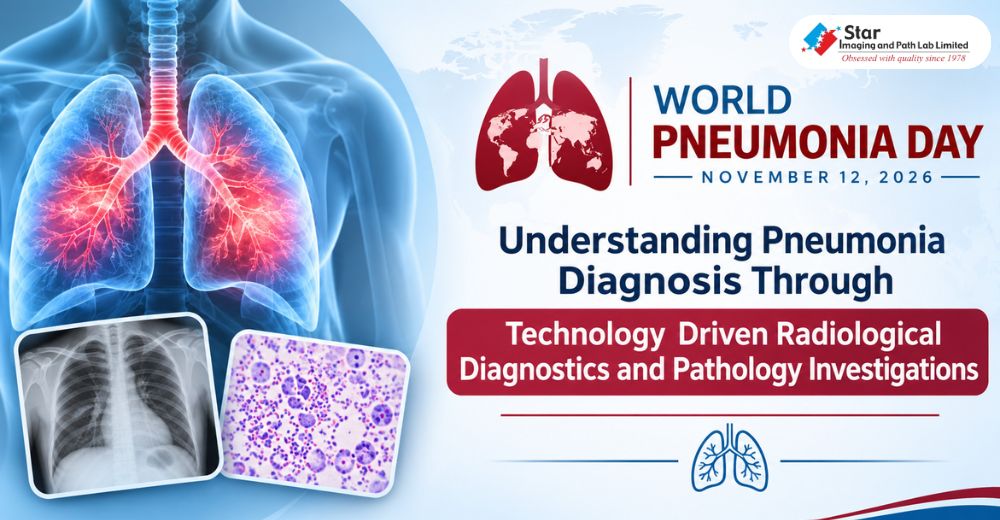
Observed every year on 12 November, World Pneumonia Day draws attention to one of the world's significant respiratory health concerns. Pneumonia is an infection that causes inflammation in the lungs and can affect people across all age groups. While some cases remain relatively mild, others can lead to serious breathing difficulties and complications, particularly among young children, older adults and individuals with existing health conditions.
Pneumonia can be caused by different infectious organisms, including bacteria and viruses. Its symptoms commonly include persistent cough, fever, chills, chest discomfort, fatigue and difficulty breathing. However, these symptoms can overlap with other respiratory illnesses, making clinical assessment and appropriate diagnostic investigations important in establishing the cause and extent of the infection.
How Is Pneumonia Diagnosed Through Imaging and Pathological Investigations?
Pneumonia diagnosis involves more than identifying respiratory symptoms. Doctors may recommend a combination of radiological imaging and laboratory investigations depending on the patient's condition, medical history and clinical findings.
Chest X-Ray for Pneumonia
A Chest X-Ray for Pneumonia is one of the primary imaging investigations used when pneumonia is suspected. It helps radiologists assess the lungs for areas of abnormal opacity or consolidation, which may indicate infection. Chest radiography also helps evaluate the distribution of lung involvement and identify associated findings, such as fluid accumulation around the lungs.
HRCT Chest for Detailed Lung Assessment
In selected cases, a High-Resolution CT (HRCT) Chest may be recommended when a Chest X-Ray does not provide sufficient information or when a more detailed assessment of lung abnormalities is required. HRCT provides detailed cross-sectional images of lung tissue and helps evaluate patterns of inflammation, the extent of involvement and certain associated complications. Its use depends on clinical indications and is not routinely required for every pneumonia patient.
CBC and CRP Tests
Laboratory investigations provide additional information about the body's response to infection. A Complete Blood Count (CBC) measures different blood cell components, including white blood cells, which may show changes during an infectious process. C-Reactive Protein (CRP) is an inflammatory marker that helps assess the degree of inflammation in the body and can also be useful in monitoring the clinical course when advised by the treating doctor. Neither test independently confirms pneumonia or identifies its specific cause.
Blood Culture and Sputum Culture
When bacterial pneumonia is suspected, particularly in patients with more severe illness, microbiological investigations may be recommended. A Blood Culture test checks for bacteria or other organisms circulating in the bloodstream and can help identify bloodstream infections. Sputum Culture examines respiratory mucus collected through coughing to identify potentially responsible microorganisms and assess their antibiotic susceptibility. These findings can assist doctors in making informed decisions about antimicrobial treatment.
Respiratory Viral Pathogen Panel by RT-PCR
Viruses are also important causes of respiratory infections, including pneumonia. A Respiratory Viral Pathogen Panel by RT-PCR helps identify the genetic material of specific respiratory viruses in a clinical sample. The investigation uses a nasopharyngeal swab, collected from the upper part of the nasal passage, to test for targeted respiratory pathogens. Identifying a viral infection can provide valuable information for clinical assessment and help guide appropriate management. A positive viral result, however, does not independently establish the presence of pneumonia.
The selection of investigations depends on individual clinical requirements. Not every patient needs all these tests, and the treating doctor determines which examinations are appropriate.
The Role of Advanced Diagnostics in Pneumonia Assessment
Accurate diagnostic assessment relies on the quality of both imaging and laboratory investigations, as well as the expertise involved in interpreting their findings. Radiology helps establish the location and extent of lung abnormalities, while pathology and microbiology provide information about inflammatory responses and possible infectious organisms. Together, these disciplines contribute complementary information that supports clinical decision-making.
At Star Imaging and Path Lab Limited, advanced radiology infrastructure and specialised pathology services bring these diagnostic disciplines together. With advanced imaging capabilities, experienced radiologists and qualified pathology professionals, the centre emphasises accurate examination, quality-focused laboratory processes and dependable reporting.
As a NABH-accredited imaging facility and NABL-accredited laboratory, Star Imaging and Path Lab Limited maintains a strong focus on diagnostic quality and professional expertise. Its integrated approach to Radiology and Pathology reflects the importance of selecting the right investigation and ensuring that its findings are interpreted in the appropriate clinical context.
On World Pneumonia Day, the importance of respiratory health deserves attention beyond awareness alone. Appropriate imaging and laboratory investigations play a valuable role in evaluating suspected pneumonia, identifying possible causes and supporting doctors in planning suitable treatment.
For doctor-recommended pneumonia investigations, contact Star Imaging and Path Lab Limited at 011-45602200 or visit www.starimaging.in.
Frequently Asked Questions About Pneumonia Diagnosis
Question: Can a Chest X-Ray confirm pneumonia?
Answer: A Chest X-Ray can reveal lung abnormalities such as consolidation and opacities that support a diagnosis of pneumonia. However, imaging findings must be assessed alongside symptoms, clinical examination and other relevant investigations. In certain cases, additional imaging or laboratory tests may be necessary.
Question: When is HRCT Chest recommended for pneumonia?
Answer: HRCT Chest may be advised when a Chest X-Ray does not adequately explain the patient's symptoms, when complications are suspected or when detailed evaluation of lung involvement is required. The decision depends on the treating doctor's clinical assessment.
Question: What is the difference between CBC and CRP in pneumonia investigations?
Answer: CBC evaluates blood cell counts, including white blood cells, which may change during infection. CRP measures a protein associated with inflammation and helps assess inflammatory activity. Both provide complementary information but cannot independently determine the exact organism causing pneumonia.
Question: Why are blood culture and sputum culture recommended in pneumonia?
Answer: Blood culture helps identify organisms present in the bloodstream, while sputum culture examines respiratory secretions for potentially infection-causing microorganisms. These tests are particularly useful in selected patients with moderate to severe illness or when identifying the organism may influence antibiotic selection.
Question: What does a Respiratory Viral Pathogen Panel by RT-PCR detect?
Answer: This molecular investigation identifies genetic material from specific respiratory viruses using a nasopharyngeal swab. It can help identify viral infections associated with respiratory symptoms and provide information relevant to clinical management. It does not independently confirm pneumonia.
Question: Does every pneumonia patient require all these investigations?
Answer: No. The investigations required depend on the suspected cause, severity of symptoms, age, existing health conditions and clinical findings. A doctor may recommend Chest X-Ray and selected blood tests initially, while HRCT, cultures or respiratory viral testing may be advised in specific circumstances.







Comments List