
How an HRCT scan helps find the cause of your cough
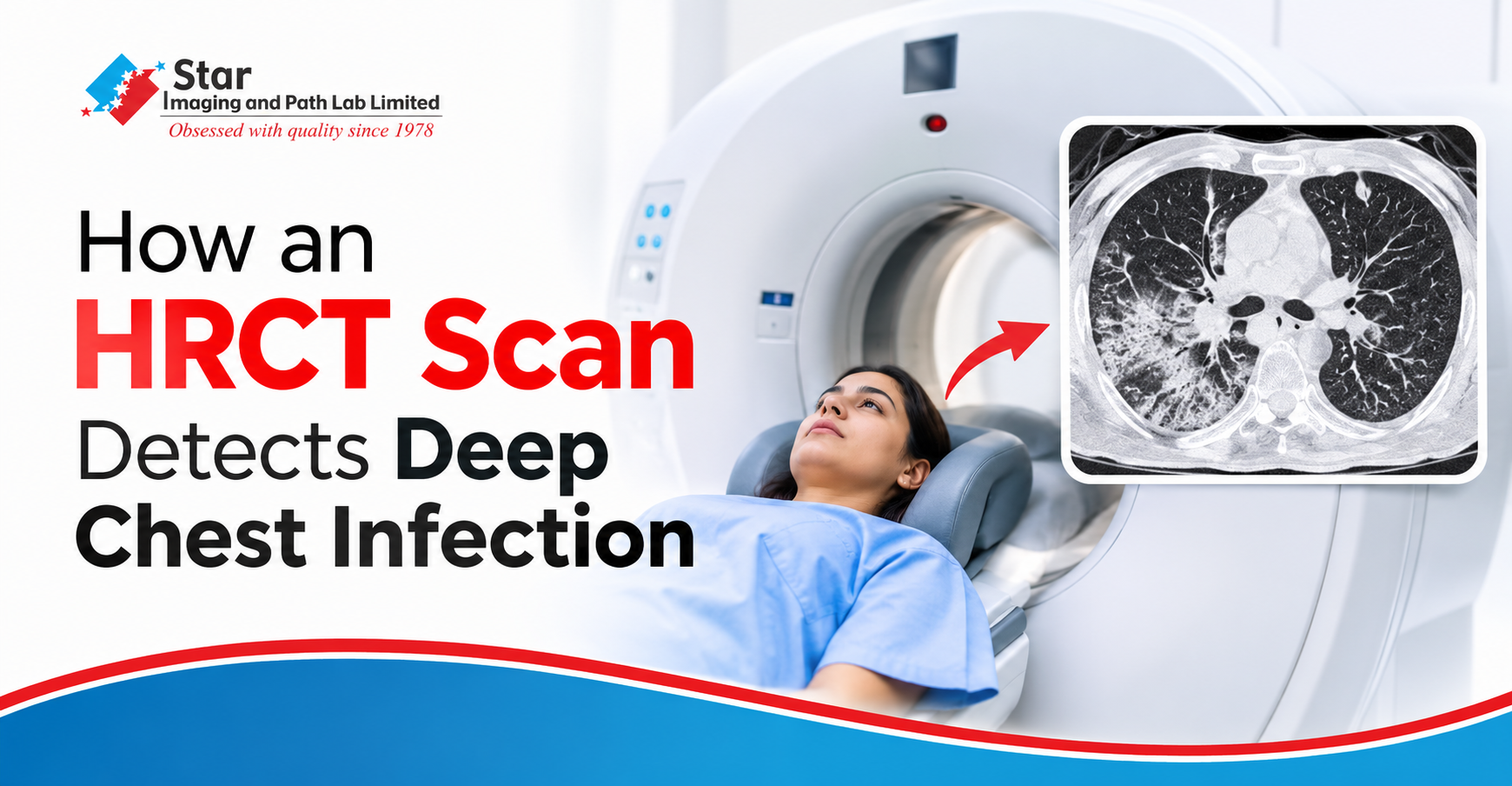
A continuous cough that drags on for weeks is physically exhausting and mentally draining. Many patients visit a physician and get a standard chest X ray. They are often surprised when the report comes back clear even though their cough shows no sign of stopping. When a doctor orders an HRCT scan, patients feel confused about why a second diagnostic test is needed.
Understanding how a High Resolution Computed Tomography scan works explains why it succeeds where basic X rays fall short. It gives doctors the exact diagnostic clarity required to treat persistent lung issues effectively.
Why a Standard Chest X Ray Can Miss Deep Lung Infection
A conventional digital chest X ray is a valuable first line evaluation, but it produces a flat two dimensional image. In a basic X ray, all the structures inside your chest are overlaid on top of one another. The ribs, heart, blood vessels, and lung tissue appear in a single overlapping view.
If a mild infection or early inflammation is tucked behind the heart or hidden behind a rib, a standard X ray easily misses it. Early stage bacterial pneumonia, subtle viral lung involvement, and localized bronchial inflammation often do not create a shadow dense enough to show up on a flat X ray plate.
How an HRCT Scan Sees Through Lung Tissue
An HRCT scan takes a completely different approach to chest diagnostics. Instead of a single flat snapshot, the scanner takes hundreds of ultra thin cross sectional images of the lungs. These detailed images are often as thin as zero point six millimeters.
Imagine slicing a loaf of bread to inspect every single slice individually. An HRCT scan allows radiologists to examine the lungs layer by layer. This reveals delicate air sacs, small airways, and fine blood vessels with exceptional structural detail.
This high level of precision allows an HRCT chest scan to spot subtle diagnostic changes that remain invisible on routine X rays, including:
- Ground glass opacities: Faint hazy patches in lung tissue that signal early fluid accumulation or viral inflammation.
- Early consolidation: Small areas where air in the lungs is replaced by fluid or inflammatory pus from a bacterial infection.
- Tree in bud patterns: Tiny branching structures showing mucus or infection filling the smallest bronchial airways.
- Bronchiectasis: Permanent widening or scarring of the airways caused by repeated or long standing chest infections.
When Doctors Recommend an HRCT Scan for a Persistent Cough
Physicians typically recommend an HRCT scan when a patient presents with specific clinical flags that require deeper evaluation:
-
A cough that persists for more than two or three weeks despite standard antibiotic or anti allergy treatment.
- A persistent cough accompanied by unexplained fever, night sweats, or unexpected weight loss.
- Chest tightness, localized discomfort, or shortness of breath while resting or during mild exertion.
- Clear or inconclusive chest X rays in patients with severe, ongoing respiratory symptoms.
- A history of smoking, environmental dust exposure, or recurring bronchial infections.
Getting an HRCT scan early prevents months of trial and error treatment. It identifies the exact location and pattern of lung involvement so your physician can prescribe the right medication immediately.
Addressing Patient Safety and Radiation Concerns
It is completely normal to feel apprehensive when scheduled for a chest scan. Patients frequently ask whether the diagnostic procedure causes pain and how much radiation is involved.
An HRCT scan is entirely non invasive and completely painless. You simply lie comfortably on a cushioned table that glides smoothly through a donut shaped scanner ring. The entire imaging process takes less than ten seconds, requiring only a brief breath hold to keep the images sharp.
Modern diagnostic radiology has advanced significantly to prioritize patient safety. Diagnostic centres equipped with advanced technology use low dose CT software and 640 slice scanners. These machines capture full high resolution chest images using a fraction of the radiation required by older equipment.
Getting Accurate Lung Imaging at Star Imaging
When dealing with a constant cough, getting timely and accurate diagnostic answers is essential for a fast recovery. Star Imaging and Path Lab Limited brings over forty six years of diagnostic excellence across Delhi, offering low dose HRCT chest scanning and comprehensive pathology services.
With experienced radiologists, clean diagnostic facilities across Tilak Nagar, Vikaspuri, Najafgarh, and Pusa Road, and quick online report downloads, Star Imaging and Path Lab Limited and path ensures a supportive experience. If a lingering cough is affecting your daily life, speak with your doctor about getting an HRCT scan today.











Comments List