
The Future of Allergy Testing: Mr. Pawan Gupta on CRD and Diagnostics
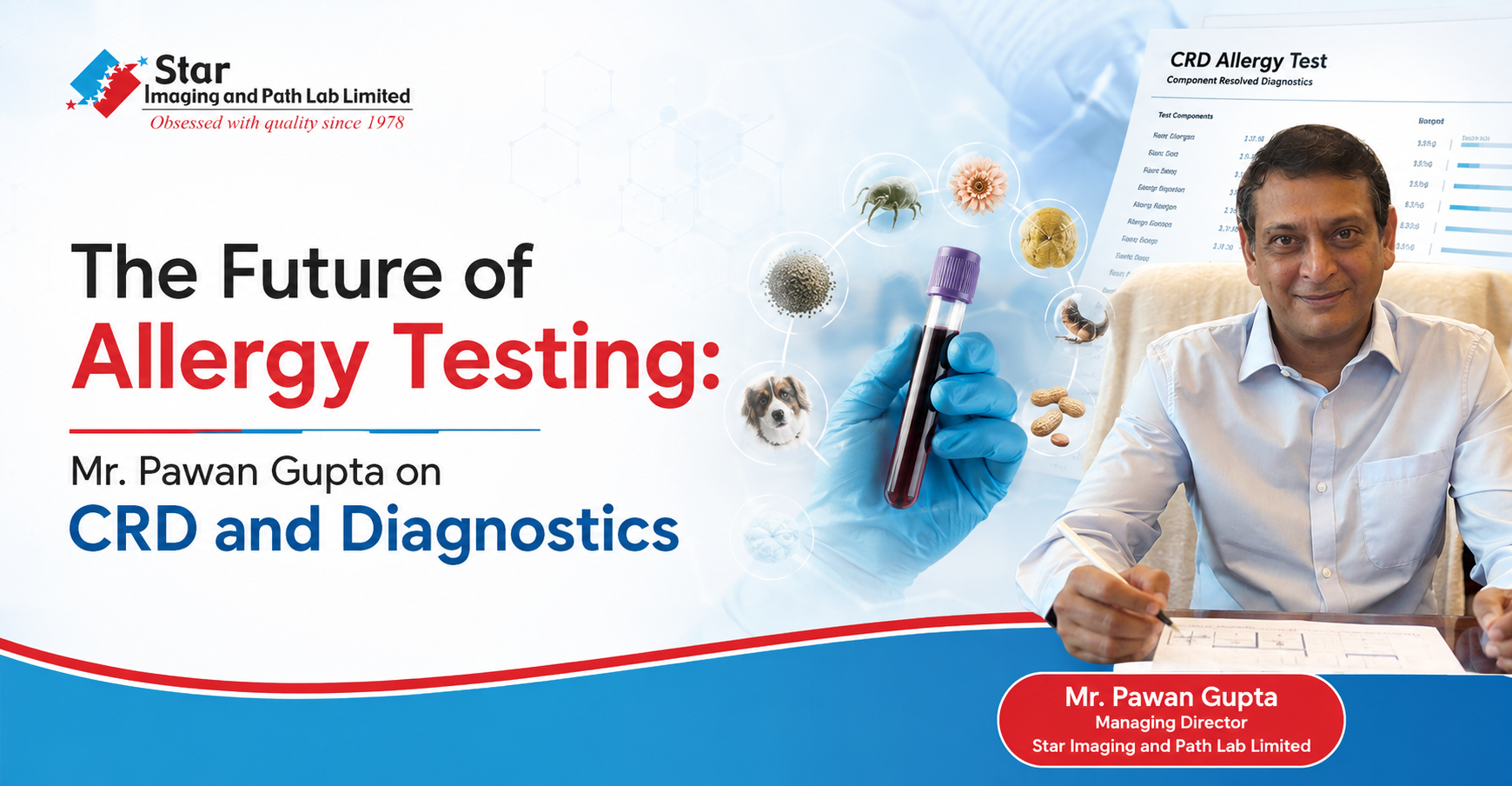
Allergy testing is changing as diagnostic technology provides new ways to understand how the body responds to different allergens. Component Resolved Diagnostics (CRD) examines specific components of an allergen rather than just looking at the broader source of the allergen.
So, what does this change mean for the future of allergy testing? Mr. Pawan Gupta, Managing Director, Star Imaging and Path Lab Limited, shares his thoughts on how diagnostic technology is changing, why component-level information is important and where CRD could fit into the future of personalized healthcare.
Expert Profile
Name: Mr. Pawan Gupta
Designation: Managing Director
Organisation: Star Imaging and Path Lab Limited

Mr. Pawan Gupta discusses how diagnostic technology is changing the way allergy testing can be approached. He answered questions about CRD, component level testing and the future of diagnostic technology:
Question 1. You are known to be someone who follows technology closely. What makes a technology truly exciting in healthcare?
Mr. Pawan Gupta:
Simple. When it changes the quality of information we have.
I am less interested in technology that is just new and more interested in technology that helps us see something differently. In diagnostics, that difference can be significant.
Question 2. Allergy testing has been around for decades. What is changing now?
Mr. Pawan Gupta:
We are moving from broad answers to sharper ones.
It is no longer just about asking, “What am I allergic to”? Technology is helping us ask, “What exactly is happening at the component level”? That is a much more interesting question.
Question 3. So, where does CRD fit into this picture?
Mr. Pawan Gupta:
CRD is a great example of diagnostics becoming more granular.
Instead of stopping at the allergen source, it looks at specific components. You get a closer look at the sensitisation pattern, and that can add a very useful layer of information for the clinician.
Question 4. What makes CRD stand out from a technology perspective?
Mr. Pawan Gupta:
Detail. The same allergen does not necessarily tell the same story for every patient. Component level testing can reveal differences that a broader view may not capture.
That is the kind of progress I find exciting.
Question 5. Is more technology always better?
Mr. Pawan Gupta:
I look at technology through one lens: does it give us a better answer? If it does, it has value. If it simply makes the process more complicated, it is advancement without purpose.
Question 6. Does CRD fit into the future of personalised healthcare?
Mr. Pawan Gupta:
I believe it does.
Healthcare is becoming more individualised, and diagnostics has to move with it. The more specifically we can understand a patient's biological response, the more meaningful the information becomes.
CRD is one step in that direction.
Question 7. If you could sum up the future of diagnostic technology in one thought, what would it be?
Mr. Pawan Gupta:
Go deeper, but keep it simple.
The future is not about making diagnostics more complicated. It is about using better technology to turn complex information into clearer understanding.
That is where innovation really matters.
To learn more about allergy testing and available diagnostic services, contact Star Imaging and Path Lab Limited.






.jpg)
1.jpg)
Comments List