
Allergy, Food Intolerance or Sensitivity? Understanding the Difference
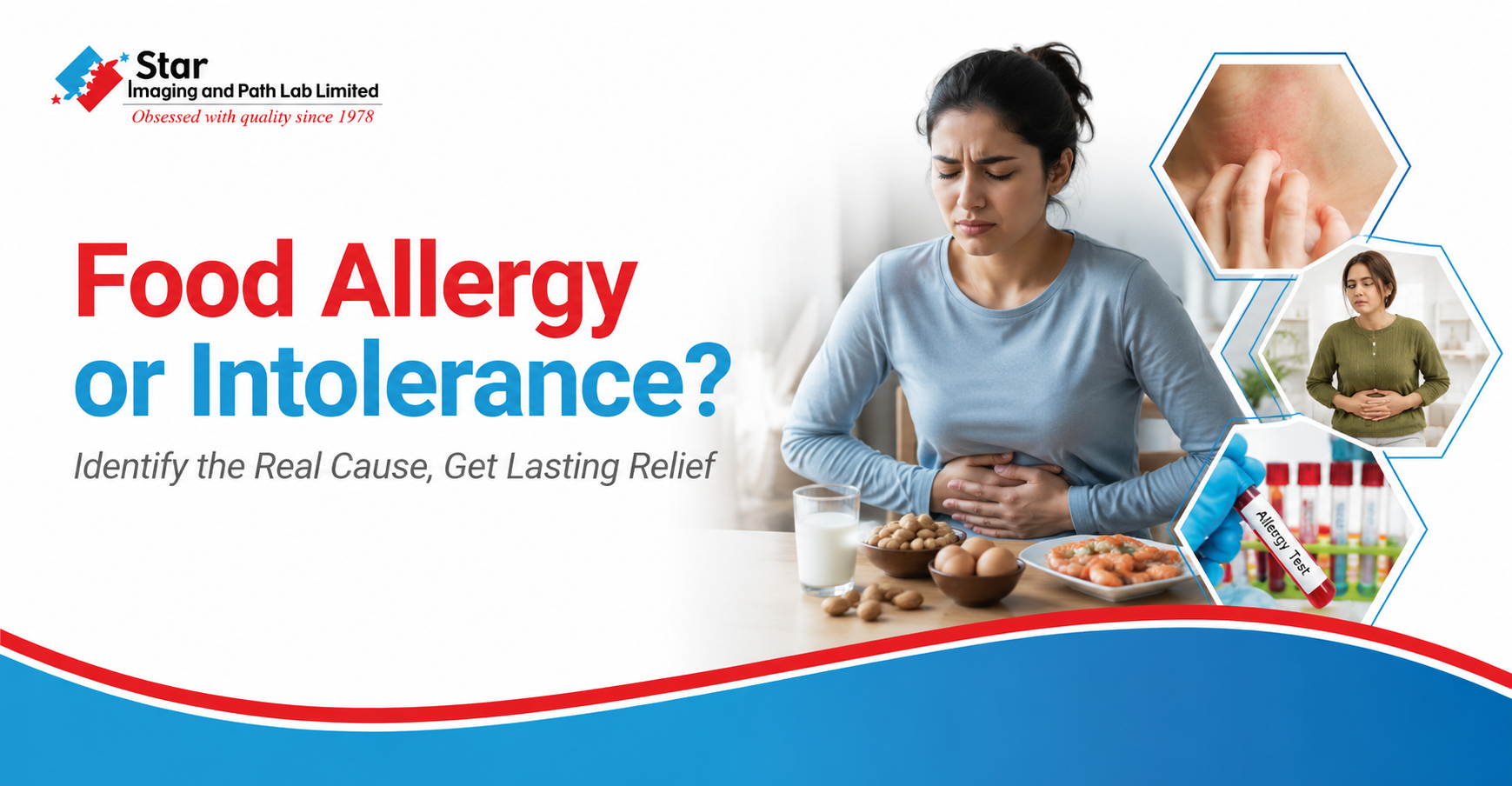
Many people believe that any unpleasant reaction after eating a particular food means they are allergic to it. If a meal is followed by itching, swelling, stomach discomfort, rashes, congestion or bloating, the first thought is often, “This food does not suit me. I must be allergic.”
But food reactions are not always that straightforward.
The body can respond to food in different ways. Sometimes the immune system is involved. Sometimes the digestive system struggles to process a food component. And sometimes the word “sensitivity” is used casually for symptoms that may have several possible causes.
That is why understanding food allergy vs food intolerance is important. The difference can influence what you avoid, what you continue eating and which test may actually be useful for your symptoms.
When Food Does Not Suit You
A food reaction can feel confusing because different conditions may produce similar symptoms. Bloating, abdominal discomfort, skin irritation, itching, diarrhoea or congestion may appear after eating, but these symptoms do not automatically confirm a food allergy.
For example, one person may develop hives after eating a particular food because of an immune response. Another person may feel bloated after consuming milk because their body has difficulty digesting lactose. A third person may describe themselves as having food sensitivity, even though the exact cause of their symptoms has not been identified.
This is why self-diagnosis can be misleading. Avoiding multiple foods without proper evaluation may create unnecessary restrictions and may not address the real reason behind the symptoms.
Food Allergy vs Food Intolerance
A true food allergy involves the immune system. In many cases, the body produces Immunoglobulin E, commonly called IgE, against specific proteins found in a food. When the person eats that food again, the immune system may react.
An allergic reaction to food may cause symptoms such as itching, hives, swelling, skin rashes, stomach symptoms, breathing difficulty or, in severe cases, anaphylaxis. These reactions can sometimes occur quickly and may require urgent medical attention.
Food intolerance works differently. It usually does not follow the same IgE-mediated immune pathway. Instead, the body may have difficulty digesting, absorbing or tolerating a particular food or food component.
Lactose intolerance is a common example. When the body does not produce enough lactase, it becomes difficult to digest lactose in milk and dairy products. This can lead to food intolerance symptoms such as bloating, gas, abdominal cramps or diarrhoea.
So, while both allergy and intolerance can make a person feel unwell, their causes are different. That difference matters when choosing the right investigation.
What People Mean by Food Sensitivity
The term “food sensitivity” is used very commonly, but it is not a single clearly defined medical diagnosis. People may use it when they notice discomfort after eating dairy, gluten, nuts, wheat, spices or other foods.
In everyday language, sensitivity simply means, “This food seems to trigger something in my body.” However, medically, the reason behind that reaction still needs to be understood.
It may be an allergy. It may be an intolerance. It may be related to digestion, gut health, quantity of food consumed or another health condition altogether. This is why food sensitivity should not be treated as the same thing as food allergy.
The right approach is to connect symptoms with exposure history, medical assessment and, when needed, relevant testing.
Why Symptoms Alone Can Mislead
Food-related symptoms often overlap. A rash may be linked to an allergy, but it may also have another cause. Bloating may happen after food intolerance, but it can also be associated with digestive conditions. Congestion may appear after certain foods, but that does not always mean the food is the direct cause.
This overlap is one reason why people sometimes remove several foods from their diet without clear evidence. While this may seem like a safe step, it can lead to unnecessary dietary limitations.
The better question is not simply, “Which food caused symptoms?”
The better question is, “What type of reaction is happening, and is it clinically relevant?”
That is where a carefully selected food allergy test can help provide more information.
Why Allergy Testing Needs Context
Allergy testing can help identify sensitisation to specific allergens. In IgE-based tests, the aim is to detect whether the immune system has produced IgE antibodies against particular allergen sources or allergen components.
However, a positive result does not always mean that the person has a confirmed allergy. It may show sensitisation, but sensitisation and clinical allergy are not always the same.
For example, a person may test positive to an allergen but may not develop symptoms when exposed to it. In another case, a person may have symptoms that match their test results and history more clearly.
This is why IgE allergy testing should be interpreted along with symptoms, exposure pattern, medical history and clinical judgement. A lab report is an important part of the picture, but it should not be treated as the complete answer on its own.
How CRD Allergy Testing Helps
Traditional allergy tests often look at whole allergen extracts. These extracts may contain multiple proteins from the same allergen source. But not every protein has the same clinical meaning.
Component Resolved Diagnostics, also known as CRD, takes a more detailed approach. Instead of only testing a whole allergen source, a CRD allergy test can evaluate individual allergen components.
This can help clinicians understand which specific protein the immune system is reacting to. That extra detail may be useful in complex allergy cases, multiple positive results or unclear reaction patterns.
CRD may also help in assessing cross reactivity. Cross reactivity happens when IgE antibodies react to similar proteins found in different allergen sources. For example, a person may appear to react to multiple foods or environmental allergens because some of the proteins are structurally similar.
By looking more closely at molecular components, CRD can provide deeper insight into sensitisation patterns.
Advanced Allergy Profiles at Star Imaging
At Star Imaging and Path Lab, advanced allergy profiling is designed to support clinicians with detailed information for allergy evaluation.
The comprehensive CRD-based Allergy Profile can evaluate up to 300 allergens, including 218 molecular allergens and 82 purified allergen extracts. It covers 145 allergen sources, 85 allergen families and 107 exclusive allergens, helping provide a broader view of possible allergic sensitisation.
This profile is performed using a single blood sample and may be useful for patients with suspected food allergies, repeated allergic symptoms, multiple sensitivities or previous inconclusive allergy investigations.
Where clinically appropriate, Star Imaging and Path Lab also offers a CRD IgE Allergy Test for general allergy evaluation and a CRD IgG Food Intolerance Test for food intolerance evaluation.
However, these tests should always be understood in the context of the patient’s symptoms and clinical history. The purpose is not to label every discomfort as an allergy. The purpose is to help clinicians interpret what may be relevant and what may not be.
FAQ
Question 1 - Food Allergy vs Intolerance: Difference?
Answer - A food allergy involves an immune response to specific food proteins and may involve IgE antibodies. Food intolerance usually refers to difficulty digesting or tolerating a food or food component and does not follow the same IgE-mediated mechanism.
Question 2 - Is Food Sensitivity a Food Allergy?
Answer - No. Food sensitivity is a broad term used for unwanted reactions after eating certain foods. It is not one specific medical diagnosis and should not automatically be considered the same as food allergy.
Question 3 - What Test Helps Detect Food Allergy?
Answer - IgE-based allergy testing can help detect sensitisation to specific allergens. In some cases, Component Resolved Diagnostics may provide additional detail by evaluating individual allergen components.
Question 4 - What Is a CRD Allergy Test?
Answer - A CRD allergy test uses Component Resolved Diagnostics to evaluate specific allergenic components instead of only whole allergen extracts. This can help provide more detailed information about sensitisation and cross reactivity.
Question 5 - Can a Positive Test Confirm Allergy?
Answer - Not always. A positive allergy test may show sensitisation, but clinical allergy depends on symptoms, exposure history and medical assessment. Test results should not be interpreted in isolation.
Question 6 - How Many Allergens Are Evaluated?
Answer - The comprehensive CRD-based Allergy Profile at Star Imaging and Path Lab evaluates up to 300 allergens, including 218 molecular allergens and 82 purified allergen extracts.
Question 7 - Is the Allergy Profile a Blood Test?
Answer - Yes. The CRD-based Allergy Profile is performed using a blood sample and can evaluate a wide range of allergen components through a single investigation.
Question 8 - Can Allergy and Intolerance Coexist?
Answer - Yes. A person may have different types of food-related reactions. This is why symptoms, clinical history and appropriate laboratory testing should be considered together before making dietary decisions.


.png)

.jpg)

.jpg)
.png)

.png)
.jpg)
Comments List