
How many tests in full body checkup: A complete guide
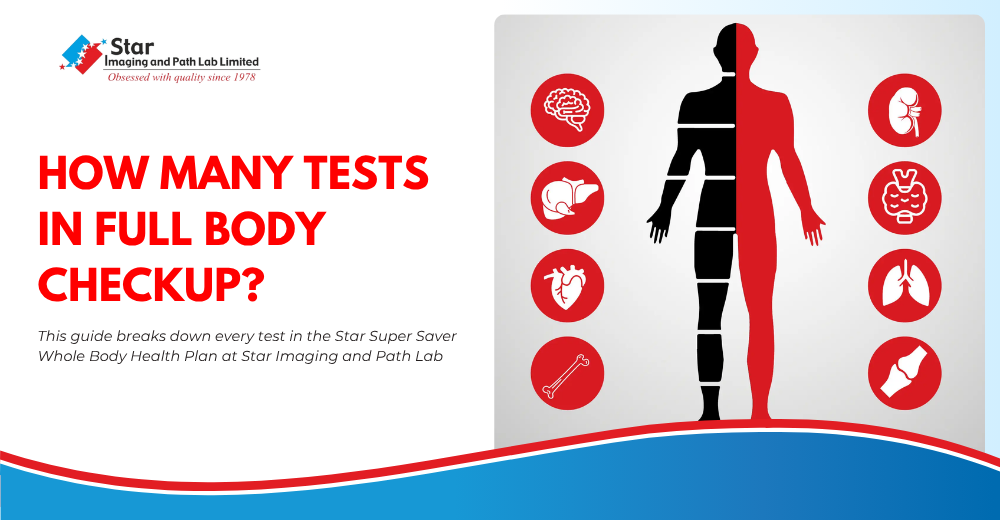
Most people book a full body checkup only after something feels wrong. That is already too late for conditions like fatty liver, early kidney disease, or thyroid dysfunction, because these give zero warning signals until they have progressed significantly. A full body checkup exists precisely to catch what your body is not telling you.
But here is the confusion most people face: what exactly does a full body checkup include? Is it just a blood test? Does it cover your heart? Your abdomen? Your lungs? The answer varies dramatically from one lab to another, and choosing the wrong package means paying for an incomplete picture of your health.
This guide breaks down every test in the Star Super Saver Whole Body Health Plan at Star Imaging and Path Lab, in Delhi. 80 parameters across 11 test groups. So you know exactly what you are getting and why each test matters.
What Does a Full Body Checkup Actually Cover?
A proper full body checkup does not stop at blood work. It examines your blood, urine, liver, kidneys, thyroid, heart, lungs, and entire abdomen. Star Imaging's package covers all of this in a single visit, with reports delivered within 24 hours.
Here is every test included and what it checks.
Full Body Checkup Test List at Star Imaging
1. Complete Haemogram with Peripheral Smear
This test checks your red blood cells, white blood cells, haemoglobin, and platelets. The Peripheral Smear takes it a step further by examining blood cells under a microscope, catching infections, anaemia, and blood disorders that automated counts can miss.
2. Urine Routine Examination
A urine test screens for kidney issues, urinary tract infections, early diabetes signs, and in some cases, abnormalities that warrant further investigation. It takes two minutes to give and delivers a surprising amount of information.
3. Kidney Function Test (KFT)
The KFT checks creatinine, urea, uric acid, and electrolytes to assess how well your kidneys filter waste from the blood. Kidney disease rarely shows symptoms in its early stages. This test catches the problem before it becomes serious.
4. Thyroid Function Test — FT3, FT4, TSH
Unexplained weight changes, fatigue, hair loss, and mood swings often trace back to thyroid issues. The TFT panel checks all three key markers: FT3, FT4, and TSH. Thyroid disorders are among the most under-diagnosed conditions in India, especially in women.
5. Vitamin D (25 Hydroxy Cholecalciferol)
India carries one of the highest Vitamin D deficiency rates in the world, and most people have no idea they are deficient. Low Vitamin D weakens bones, suppresses immunity, and drains energy. This test removes the guesswork.
6. Lipid Profile
The Lipid Profile measures total cholesterol, LDL, HDL, triglycerides, and VLDL. High LDL with zero symptoms is one of the most dangerous combinations in medicine. People feel completely fine while arterial damage builds quietly over years. A Lipid Profile in your health checkup catches this years before a cardiac event.
7. Liver Function Test (LFT)
The LFT checks enzymes like SGOT, SGPT, bilirubin, and albumin to evaluate how well your liver functions. With fatty liver disease rising sharply among urban Indians due to diet and sedentary lifestyles, an LFT is no longer optional in any complete body test.
8. Blood Glucose Fasting
This test screens fasting blood sugar levels to detect diabetes and pre-diabetes. India leads the world in diabetic population, with millions unaware of their condition. A single fasting glucose test can change that for you.
9. ECG (Computerised Electrocardiogram)
An ECG records your heart's electrical activity and takes under five minutes. It detects irregular rhythms, signs of a previous silent heart attack, and early cardiac stress. Including an ECG moves a medical checkup from a blood panel into genuine cardiovascular assessment.
10. Chest X-Ray (PA View)
A Chest PA View screens the lungs and heart shadow for infections, fluid, masses, or structural abnormalities. It is especially important for smokers and anyone with a persistent cough or family history of lung disease. Most budget packages skip imaging entirely. Star Imaging does not.
11. Ultrasound Whole Abdomen
This is where most basic packages fall short. The ultrasound visually examines the liver, gallbladder, spleen, pancreas, kidneys, and urinary bladder for cysts, stones, swelling, or structural issues. Blood tests alone cannot catch many of these conditions. The ultrasound does.
Why 80 Parameters and Not 30?
Some labs advertise a "full body checkup" and give you 30 blood parameters with no imaging. That is not a complete body test. The 80-parameter plan at Star Imaging combines blood work, urine analysis, thyroid, Vitamin D, cardiac imaging, lung imaging, and abdominal ultrasound. All under one roof, one visit, one report.
If you want to understand why this comprehensive approach matters for long-term health, read the detailed breakdown of full body health checkup benefits and importance.
How Often Should You Get a Full Body Test Done?
Your age and current health status are the primary factors in deciding how frequently you should book a full body checkup. As your body changes, your diagnostic needs shift from simple prevention to active monitoring.
-
Under 30 years: If you have no major family history of illness, a full body checkup once every two years is a reasonable baseline for maintaining wellness.
-
Between 30 and 45 years: This is a critical window for lifestyle-related changes. Every year is the right call to track markers like cholesterol and blood sugar.
-
Above 45 years: Risk profiles shift significantly with age. Every six months is recommended to ensure early detection of age-related conditions.
-
Existing conditions: If you already manage concerns like diabetes, blood pressure, or thyroid issues, more frequent monitoring is essential as per your doctor's advice.
Regular screening ensures that your diagnostic data remains up to date, allowing you to make informed decisions about your long-term health.
Is Cost a Barrier in Delhi?
In Delhi, cost should never be a barrier to high quality healthcare. The Star Super Saver Whole Body Health Plan at Star Imaging covers over 80 parameters at a price point significantly lower than booking each test individually.
Investing a small amount in a full body checkup today is a smart financial decision that can prevent medical bills running into lakhs by catching issues before they become emergencies.
Before you book, it is important to understand how to compare preventive health checkup packages across various diagnostic labs in Delhi. Pricing differences are often significant and not always obvious, so looking at the specific test parameters included in your plan ensures you receive the best value for your health.
Who Should Book Right Now?
Preventive healthcare is a necessity for anyone living a fast paced urban lifestyle. You should prioritize booking a full body checkup if you fall into any of the following categories:
-
Professionals with desk jobs: If you are above 30 and manage a sedentary schedule with irregular eating habits.
-
Family health history: If there is a history of diabetes, heart disease, or thyroid disorders in your family.
-
Missed screenings: If you skipped your annual health checkup last year and need to get back on track.
-
The asymptomatic group: If you feel fine but have not verified your internal health markers recently.
The benefits of staying consistent with your full body checkup go far beyond early disease detection. Regular screenings lead to significant financial savings by avoiding emergency treatments, reduced health anxiety, and the confidence that comes from knowing your actual health status rather than guessing at it.
Book Your Full Body Checkup at Star Imaging
Star Imaging and Path Lab is NABL and NABH accredited, located in Tilak Nagar, New Delhi. The Star Super Saver Whole Body Health Plan covers 80 parameters, imaging included, with reports ready in 24 hours.
Call 011 4560 2230 or visit www.starimaging.in to book your appointment.
Full body checkup frequently asked questions
Question: How many tests does the Star Imaging full body checkup include?
Answer: The Star Super Saver Whole Body Health Plan covers 80 parameters including advanced blood profiles and routine urine analysis. This clinical package also incorporates vital imaging like ECG, Chest X-Ray, and Ultrasound Whole Abdomen for a thorough internal assessment.
Question: Do I need to fast before the checkup?
Answer: Yes, a fasting period of 10 to 12 hours is required to ensure accurate results for blood glucose and lipid profile markers. While you should avoid food and caffeine, drinking plain water is allowed and encouraged to stay hydrated during the process.
Question: How long does the full body test take?
Answer: The entire process including sample collection and imaging typically takes between 2 to 3 hours at our center. You can expect your professional digital reports to be delivered via email or WhatsApp within 24 hours of the screening.
Question: Can a full body checkup detect cancer?
Answer: A standard full body checkup is not dedicated to cancer screening. However, tests like the Haemogram, LFT, and Ultrasound Abdomen can flag abnormalities that prompt further investigation. Star Imaging also runs a dedicated Star Preventive Cancer Care Clinic for targeted cancer screening.
Question: How often should I get a complete body test done?
Answer: Individuals under 30 should screen every two years, while those between 30 and 45 should book an annual checkup. For anyone over 45 or managing chronic conditions, a full body checkup every six months is recommended for proactive health management.



.jpg)
.gif)
.png)
.jpg)
4.png)
.png)

.png)
Comments List