
Sneezing and Watery Eyes: Is It Dust Allergy or Seasonal Pollen?
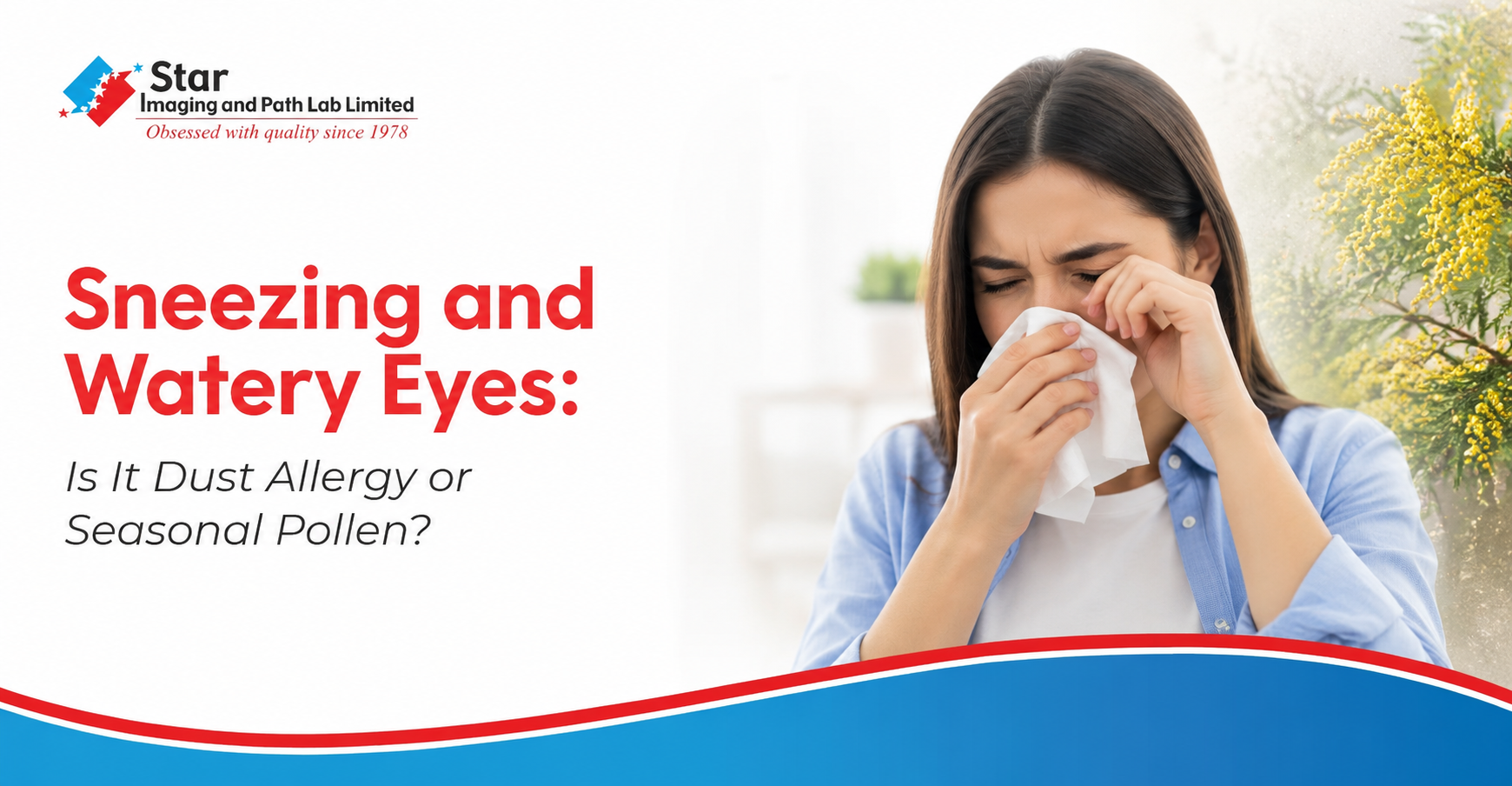
Sneezing and watery eyes can make a normal day feel uncomfortable. You may notice that your nose starts running when you wake up, clean your room, step outside, or spend time in a garden. These symptoms are often linked with allergies, but it is not always easy to know whether dust, pollen, or another trigger is responsible.
The timing and place where symptoms appear can offer useful clues. However, similar symptoms can occur with different allergies, so a doctor may suggest an allergy blood test when symptoms keep returning or affect daily life.
Why Do Sneezing and Watery Eyes Happen?
When the body treats a harmless substance as a threat, it may release chemicals that cause allergy symptoms. This can lead to repeated sneezing, a runny or blocked nose, itchy eyes, watery eyes, throat irritation, or coughing.
For many people, the problem is not an infection. It is the body reacting to an allergy trigger in the surrounding environment.
Could It Be Dust Allergy?
Dust allergy symptoms often become noticeable indoors. The trigger may not be ordinary visible dust alone. Tiny particles in household dust, including dust mites, can irritate people who are sensitive to them.
You may want to notice whether you sneeze more in these situations:
-
Soon after waking up in the morning
-
While making the bed or changing bedsheets
-
During house cleaning or dusting
-
In rooms with carpets, curtains, soft toys, or old furniture
-
When spending time in closed rooms
-
When using stored blankets or cushions
Dust mite allergy symptoms may continue throughout the year because indoor exposure can happen every day. Some people may feel worse at night or early in the morning because they spend many hours around bedding and mattresses.
Could It Be Seasonal Pollen Allergy?
Seasonal allergy symptoms may become more noticeable at certain times of the year. Pollen is a fine powder released by plants, trees, and grass. It can travel in the air and may trigger symptoms when a sensitive person is outdoors.
Pollen allergy symptoms may be more likely if sneezing and watery eyes begin or worsen after:
-
Going to parks, gardens, or open outdoor areas
-
Travelling on a windy day
-
Spending time near flowering plants or grass
-
Opening windows when there is more outdoor dust and pollen
-
Experiencing the same symptoms during a particular season each year
A person with seasonal allergy symptoms may also experience an itchy nose, frequent sneezing, clear nasal discharge, or an itchy throat.
It May Not Be Only Dust or Pollen
It is tempting to blame every sneeze on dust or weather change. But recurring sneezing can also be linked to pet dander, mould, smoke, strong fragrances, air pollution, or viral infections such as the common cold.
A cold often improves within a short time. Allergies may return whenever the person comes in contact with the trigger. If symptoms keep coming back in the same place, after the same activity, or during the same period of the year, it is worth discussing the pattern with a doctor.
Keep Track of Your Symptoms
Before seeking testing, it can help to make a simple note of your symptoms for one or two weeks. Write down:
-
The time symptoms begin
-
Where you were when they started
-
Whether you were indoors or outdoors
-
Activities such as cleaning, travelling, exercising, or gardening
-
Whether you had itchy eyes, cough, blocked nose, or skin symptoms
-
Whether symptoms improve after leaving a place
This record can be especially useful when allergy symptoms keep coming back after particular activities or in certain places.
When Can an Allergy Blood Test Help?
An allergy blood test may be considered when sneezing and watery eyes keep returning, interfere with sleep or work, or do not have a clear trigger. The test can check whether the body has made antibodies linked with selected allergens.
The test result should not be read alone. A positive result needs to be matched with your symptoms, daily environment, and medical history. For example, a person may show sensitivity to an allergen in a report but may not develop symptoms every time they are exposed to it.
When Might Detailed Allergy Testing Be Useful?
Some people have symptoms that continue despite avoiding obvious triggers. Others may react to more than one thing, such as dust mites, pollen, pets, or certain foods. In such situations, a more detailed allergy assessment may help a doctor understand possible sensitisation patterns based on symptoms, exposure history, and medical needs.
When Should You Consult a Doctor?
Consult a doctor if your sneezing and watery eyes are frequent, severe, or affecting your quality of life. Medical advice is especially important if you have wheezing, breathing difficulty, chest tightness, facial swelling, severe eye redness, eye pain, or symptoms that disturb sleep.
At Star Imaging and Path Lab, allergy testing is available with expert radiologists and pathologists across multiple centres in Delhi. You can book a test online or visit the nearest centre after consulting your doctor.
Frequently Asked Questions
Q - Why Am I Sneezing and My Eyes Are Watering Every Morning?
A - Morning symptoms can occur because of indoor triggers such as dust mites in bedding, pillows, mattresses, or blankets. However, other triggers may also be involved, so look for a repeated pattern and consult a doctor if symptoms continue.
Q - Can Dust Allergy Cause Watery Eyes?
A - Yes. Dust allergy symptoms can include sneezing, itchy eyes, watery eyes, a runny nose, and nasal blockage.
Q - How Do I Know if I Have a Pollen Allergy?
A - Symptoms that appear more often after outdoor exposure or during a recurring season may suggest a pollen related trigger. A doctor can help decide whether allergy testing is appropriate.
Q - Is Sneezing and Watery Eyes Always an Allergy?
A - No. These symptoms can also occur with a cold, smoke exposure, pollution, eye irritation, or other health concerns. The timing, duration, and associated symptoms matter.
Q - Can an Allergy Blood Test Identify Dust and Pollen Sensitivity?
A - An allergy blood test may help check sensitivity to selected allergens, including dust mites and pollen, depending on the test advised by your doctor.


.png)

.png)

1.jpg)

1.png)
Comments List