
Father's Day Isn't Just About Celebrating Dad. It's About Looking After Him Too.
.png)
Every Father's Day, we celebrate the visible things.
The sacrifices.
The discipline.
The long working hours.
The unwavering presence.
We remember the man who fixed things around the house, drove us to school, taught us how to ride a bicycle, helped us navigate life's difficult decisions, and somehow managed to appear stronger than every problem that came his way.
What we don't talk about enough is what happens when that man begins to grow older.
Not old in the dramatic sense. Just older.
The signs rarely arrive with an announcement. They appear quietly. A little less energy than before. A complaint about a lingering ache. A habit of sitting down sooner than usual. A reluctance to discuss discomfort because, after all, "it's nothing."
If there is one thing that we usually have noticed about our fathers over the years, it is that they are remarkably good at looking after everyone except themselves.
They will insist the family sees a doctor.
They will encourage their children to prioritise their health.
They will remind their spouses to take prescribed medication.
Yet when it comes to their own wellbeing, many fathers become experts at postponement.
"Next week."
"After work gets easier."
"Once this project is finished."
"There's no need to worry."
The irony is difficult to miss. The person who spent decades being the family's safety net often becomes the least likely member of the family to seek reassurance when something feels different.
Perhaps it is pride. Perhaps it is habit. More often, it is simply the instinct to avoid becoming a burden.
And yet, for those of us who have watched our parents grow older, there comes a moment when we realise something important.
The strongest people in our lives are not immune to change.
They are simply better at hiding it.
The Quiet Responsibility We Inherit
As children, our parents paid attention to every change in us.
A fever.
A cough.
A missed meal.
A restless night.
They noticed things before we did.
Ageing has a curious way of reversing that responsibility.
One day, without warning, we find ourselves becoming the observers.
We notice Dad rubbing his shoulder more often.
We notice that he gets tired sooner.
We notice that he dismisses symptoms he would never ignore if they belonged to someone else.
Looking after ageing parents is not about assuming the worst. It is about refusing to rely on assumptions at all.
Certainty has value.
Understanding has value.
Peace of mind has value.
Growing older brings enough uncertainties of its own. Healthcare shouldn't add to them. For families navigating medical investigations with ageing parents, concerns around comfort and safety are often just as important as the investigation itself.
In a recent conversation, Dr. Sameer Sood discusses how low-dose CT technology is helping address these very concerns.
Related Watch: Dr. Sameer Sood on Low-Dose CT Technology and What It Means
When a doctor recommends an investigation such as a CT scan, families often have questions. They wonder about comfort, accuracy, and whether the experience will be difficult for an elderly parent.
These concerns are understandable. Nobody wants healthcare to feel intimidating, especially for someone who has spent a lifetime taking care of others.
Why Modern Imaging Technology Matters For Senior Citizens
That is precisely why advances in imaging technology matter.
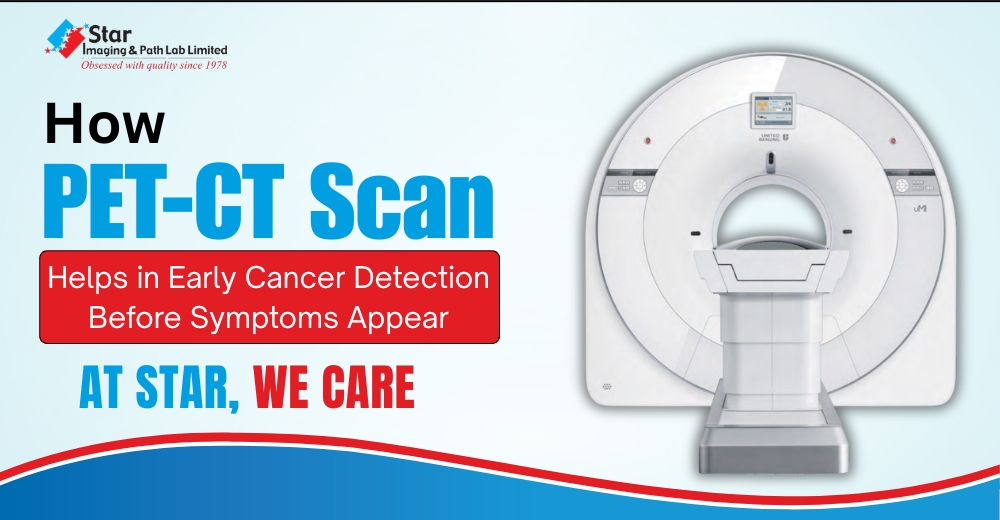
At Star Imaging and Path Lab Limited, our newly introduced CT scanner has been designed with advanced low-dose technology, helping optimize radiation exposure while delivering highly detailed images for clinical evaluation. The system also enables faster scan acquisition, an important advantage for senior citizens who may find prolonged examinations uncomfortable.

Low Radiation CT Scan with Advanced Imaging Technology
Modern healthcare focuses on accurate diagnosis while reducing unnecessary exposure. An advanced CT Scan technology approach helps patients benefit from a low dose CT Scan experience with optimized imaging methods.
Patients can benefit from:
✓ Low radiation CT scan techniques for reduced radiation exposure
✓ CT Scan with less radiation while maintaining image clarity
✓ Faster scanning process with modern CT scanner technology
✓ High-quality images for better evaluation and diagnosis
✓ Improved diagnostic confidence with advanced imaging systems
Whether your doctor recommends a CT Scan for chest concerns, abdominal conditions, kidney stones, spinal problems, or other medical requirements, choosing a safe CT Scan facility with modern CT scanner technology can support accurate results with patient-focused care.
Book Your Low Dose CT Scan Appointment Today
Schedule Your CT Scan Online
For families, this means greater reassurance during a time that can often feel uncertain. For patients, it means an experience designed around comfort and efficiency.
Technology alone cannot replace compassionate care. It never will.
But when technology makes an experience safer, smoother, and more comfortable for an ageing father, it becomes more than just a machine.
It becomes a way of caring.
This Father's Day, by all means celebrate.
Call him.
Visit him.
Take the family photograph.
Share the meal.
But if there is one gift worth considering beyond all the others, it is attention. Not because fathers ask for it. Because most of them never do.
And sometimes, the most meaningful way to honour the man who spent a lifetime looking after everyone else is to make sure someone is looking after him too.
Frequently Asked Questions
Question - Why do many fathers avoid medical investigations even when they are unwell?
Answer - Many fathers tend to minimise symptoms, prioritise family responsibilities, or assume certain changes are simply part of growing older. As a result, they often delay seeking medical advice or recommended investigations.
Question - Why might a senior citizen be advised to undergo a CT scan?
Answer - A doctor may recommend a CT scan for a variety of reasons, including persistent pain, respiratory concerns, injuries, neurological symptoms, abdominal complaints, or to gain a clearer understanding of a medical condition.
Question - What is low-dose CT technology?
Answer - Low-dose CT technology is designed to optimise radiation exposure while maintaining the image quality required for accurate clinical assessment. It represents an important advancement in modern medical imaging.
Question - Are faster CT scans beneficial for elderly patients?
Answer - Yes. Faster scan acquisition can improve patient comfort, particularly for individuals who may find it difficult to remain still for extended periods due to age, pain, or mobility concerns.
Question - What can families do to support an ageing father's health?
Answer - Simple actions can make a meaningful difference. Paying attention to changes in health, encouraging medical consultations when needed, accompanying parents to appointments, and creating an environment where health concerns can be discussed openly.
Question - What makes Father's Day a good time to talk about health?
Answer - Father's Day encourages reflection on the people who have spent years caring for us. It can also serve as a reminder to pay attention to their wellbeing and support them in prioritising their own health.


.png)
.jpg)

1.jpg)
.png)
Comments List